
Guides → ISLAND LIFE
ISLAND LIFE
Where Expats Actually Live in Aruba (and Where They Don't)
Ask on a forum where expats live in Aruba and you'll get "Noord" from ten people and "depends" from ten more. Both are right. Here's the neighborhood-by-neighborhood reality: what daily life is like in each, who ends up where, and the places that look great on a map and quietly empty out by year two.
By Jakob Jakubov, every winter on Aruba since 2021 · Updated September 2026 · 9 min read
The short version
- Most expats live in Noord, the residential district just inland from Palm Beach. Houses with gardens, five minutes from the sand, near everything. If you only read one line, that's it.
- Oranjestad is the value pick: town living, lower entry prices, real neighborhoods two streets off the cruise-ship drag.
- Palm Beach and Eagle Beach are where rental-owner expats live: condos that earn when they're away. Great for lock-and-leave, less "neighborhood" than Noord.
- Malmok and Tierra del Sol are the upscale end: coastal villas, golf, gated calm. Quieter, pricier, more seasonal.
- Savaneta is the quiet south: a fishing village for people who want the island, not the strip.
- Rent there first. A winter in the wrong district is the cheapest mistake you'll ever make. Buying in it isn't.
The honest map
Aruba is about 20 miles end to end, so "where expats live" isn't a question of regions. It's a question of which ten-minute drive you want your life to sit inside.
The foreign-resident population clusters in the northwest: Noord and its sub-neighborhoods, the beach strip from Palm to Eagle, and the villa coast at Malmok. A smaller cluster lives in and around Oranjestad. And a scattering of people have deliberately chosen the south (Savaneta, and on toward San Nicolas) because they wanted the opposite of the strip.
The names you'll hear on forums (Tierra del Sol, Gold Coast, Ruby, Opal) are mostly named communities inside Noord or Malmok, not separate towns. That confuses everyone at first. It confused us.
Noord, where most of them actually are
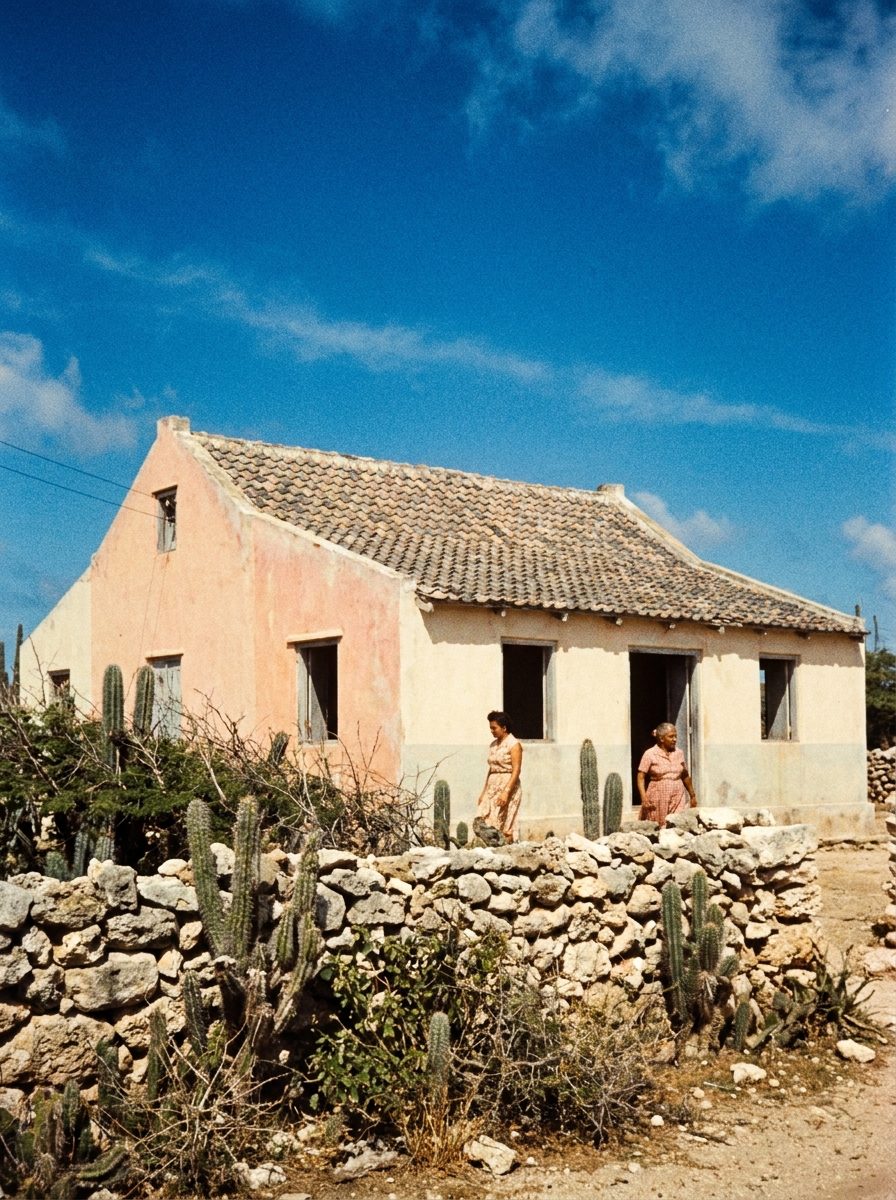
If you've only seen Aruba from a Palm Beach hotel, Noord is the district you drove through from the airport without noticing. That's rather the point. It sits just behind the high-rise strip and it's where the island lives: villas with walled gardens, cunucu houses, a few gated communities, real supermarkets, the good bakeries, roosters.
Daily life looks like coffee on a terrace with a wall around it, a five-to-ten-minute drive to Eagle or Palm Beach, and a neighborhood you can walk in the evening without dodging jet-ski touts. The Dutch, American and Canadian long-termers we've met here picked Noord for one reason: it's the only district where you get a home and proximity to the beach without beachfront prices.
The trade-off is that you'll drive everywhere. There's no Uber, buses are sparse in residential streets, and nobody in Noord walks to the beach twice. Houses run roughly $350k–$1.5M, with the gated communities toward the top. Sub-areas, what to check and who it suits are in the Noord area guide.
Oranjestad, town life and value
Oranjestad gets written off fast, "the cruise-ship town" and that's unfair. Downtown on a three-ship morning is chaos, sure. But the residential streets behind it are real Aruban neighborhoods with real Aruban neighbors, and they hold the lowest entry prices on the island: apartments and small houses from roughly $180k–$700k.
Daily life is more urban, in the small-island sense: you can walk to a bank, a pharmacy, a decent restaurant. Government offices are here, which matters once you're doing residency paperwork. The expats who choose it tend to be younger, more budget-conscious, or simply people who'd rather have a town around them than a pool. What you give up is the beach at your door, and you'll want to be picky about streets: a lovely block and a noisy one can be a hundred meters apart. More in the Oranjestad area guide.
Palm Beach & Eagle Beach, the rental-owner crowd
Here's the distinction that clears up most of the confusion: the expats who live on the beach strip are, mostly, the ones who own rental property there. Palm Beach is high-rise condos; Eagle Beach is low-rise, quieter, arguably the best beach on the island. Both are full of North Americans who bought a unit, rent it most of the year, and live in it for the winter.
Life on the strip is walkable, convenient, and never quite yours. You share the elevator with a rotating cast of holidaymakers, and August feels nothing like February. For a lock-and-leave owner who wants the place to earn while they're home in Toronto or Boston, that's the whole model. For someone who wants to live on Aruba year-round, it can start to feel like living in a hotel.
If rental income comes first, start with Palm Beach. If the beach itself is the point and you'll pay for quiet, Eagle Beach is the one people fall for at 5:30 in the evening.
Not sure whether you're a "Noord person" or a "condo on the strip" person? Tell us how you'd actually use the place (winters only, year-round, rental first) and we'll match you with the one local agent we'd send a friend to for that segment. Free, no obligation. → Start my 60-second match
Malmok & Tierra del Sol, the upscale coast
North of Palm Beach the hotels stop and the coast turns into villas. This is Malmok (snorkeling coves, rocky shoreline, a lot of very good houses) and, just inland, Tierra del Sol, the gated golf community. Together they're where the upper end of the expat population lives, at roughly $700k–$4M+.
It's quiet up here in a way that's either the entire appeal or a problem. Beautiful, breezy, private. You'll drive for groceries, the wind on an exposed terrace is relentless, and a good share of these homes sit empty part of the year, so the off-season feels emptier than the listings suggest. Waterfront buyers should read the Malmok area guide on water access and land lease before they get attached to a view.
Savaneta, the quiet south
Savaneta is the island's oldest settlement, a fishing village with over-water restaurants and no high-rises, and people choose it on purpose, after they've done the strip and decided it wasn't for them. A few expats, more locals, a genuine sense of place. Prices roughly $250k–$1.2M, with waterfront that's still reasonable by Aruba standards.
Life is slow. Same fishermen every afternoon. The drive to Eagle Beach is twenty-plus minutes, which sounds like nothing until it's daily. Fewer restaurants, fewer services, and you're near San Nicolas, which is fine by day and has parts you'd skip at night. If "away from the tourists" is the phrase that makes your shoulders drop, it's worth the drive. Full notes in the Savaneta area guide.
The strip is where you go on vacation. Noord is where you live. Most people take two winters to learn the difference.
The comparison table
| Area | Who actually lives there | Daily life | Typical price band | Best for |
|---|---|---|---|---|
| Noord | The majority of long-term expats | Residential, gardens, 5–10 min to beach | $350k–$1.5M (houses) |
Living here, full- or part-time |
| Oranjestad | Budget-conscious, town lovers | Walkable town, services, offices | $180k–$700k |
Value entry, urban feel |
| Palm Beach | Rental-owner snowbirds | Walkable strip, high-rise, busy | $300k–$1.5M (condos) |
Rental yield, lock-and-leave |
| Eagle Beach | Rental owners + beach purists | Low-rise, quieter, best beach | $500k–$3M |
Beach-first end-users |
| Malmok / Tierra del Sol | Upscale, often seasonal | Private, breezy, golf, drive for everything | $700k–$4M+ |
Villa buyers, privacy |
| Savaneta | A deliberate few | Slow, local, fishing village | $250k–$1.2M |
Quiet, waterfront value |
Bands match our area-by-area guide and are placeholders we re-check every winter. Orientation, not quotes.
Where they don't live
Worth saying out loud, because the map makes every district look equal.
San Nicolas, the second town in the far south, has real character, a growing street-art scene and tempting prices. Very few expats live there: distance to the northwest is the main reason, the after-dark reputation, fair or not, the second. Santa Cruz and the interior are local, affordable and hot, with less breeze and no beach anywhere near; most foreigners who try it drift back to the coast. The north coast is wild and beautiful and there's almost nothing to buy.
None of these are bad choices. They're the ones people make by accident when they buy on a map instead of a visit.
Rent there first
We say it in every guide and it matters most here: rent in the district before you buy in it. One winter, ideally two in two areas. Aruba is small enough that renting in Noord still lets you spend every day at Eagle Beach, and big enough that a Savaneta commute you loved for a week can wear you down by March.
The arc we see over and over: rent on the strip year one because it's familiar, rent in Noord year two because a friend suggested it, buy in Noord year three. To compress that, our snowbird guide has the winter-rental numbers, and moving to & living on Aruba covers the daily stuff (power bills, cars, the wind) that matters regardless of postcode.
Know your district? Now find the property. Tell us type, budget and timeline: we'll match you with the one vetted local agent for that area and send a realistic price picture for your range. Free, no obligation. → Start my 60-second match · Not ready? Take the free Buyer's Guide PDF instead →
Common questions
Where do expats live in Aruba?
Mostly in Noord, the residential district just inland from Palm Beach. Smaller clusters live in Oranjestad (value, town life), on the Palm/Eagle Beach strip (mainly rental owners), in Malmok and Tierra del Sol (upscale), and a deliberate few in Savaneta.
What is the best place to live in Aruba?
For most people who want to actually live here, Noord. For value, Oranjestad. For rental income, Palm or Eagle Beach. For privacy with budget to match, Malmok. There's no single best: there's a best for how you'll use it.
Noord vs Oranjestad, which is better?
Noord if you want a house near the beach and don't mind driving. Oranjestad if you want lower prices, a walkable town and services at your door. Both are genuinely liveable.
What are Tierra del Sol, Malmok and Gold Coast?
Named communities on the upscale northwest coast, not separate towns. Tierra del Sol is the gated golf community; Malmok is the villa coast north of Palm Beach; Gold Coast is a gated development in the same area. See our Malmok guide.
Is it better to live near Eagle Beach or Palm Beach?
Eagle is quieter, low-rise and has the better beach; Palm is high-rise, busier and stronger for short-term rental. To live near, most people prefer Eagle, or Noord, a short drive from both.
Is Aruba a good place for expats?
Generally yes: safe, English-speaking, stable, outside the hurricane belt, with direct North-American flights. The trade-offs are cost, a small island, and sorting residency separately from buying. Our living on Aruba guide has the honest version.
Related guides