
Guides → ISLAND LIFE
ISLAND LIFE
Moving to & Living on Aruba: An Honest Island-Life Guide
Everyone pictures the beach. Nobody pictures the electricity bill, the Papiamento on the supermarket radio, or the way the trade wind never, ever stops. Here's what living on Aruba is actually like, from someone who does it every winter.
By Jakob Jakubov, every winter on Aruba since 2021 · Updated August 2026 · 12 min read
The short version
- Aruba sits outside the hurricane belt. It's the single biggest reason people choose it over most of the Caribbean: the weather is boringly, wonderfully reliable.
- English gets you everywhere. Papiamento is the mother tongue, Dutch is official, but nearly everyone switches to English the moment they hear your accent.
- It's dry, not lush. Think cactus, aloe, and turquoise water, not rainforest. The constant trade wind is the island's air conditioning.
- The cost of paradise is real. Almost everything is imported, so groceries and electricity will surprise you. Full breakdown here.
- Owning a home does not make you a resident. Property and residency are two separate processes, don't confuse them. More on that here.
What Aruba is actually like to live on
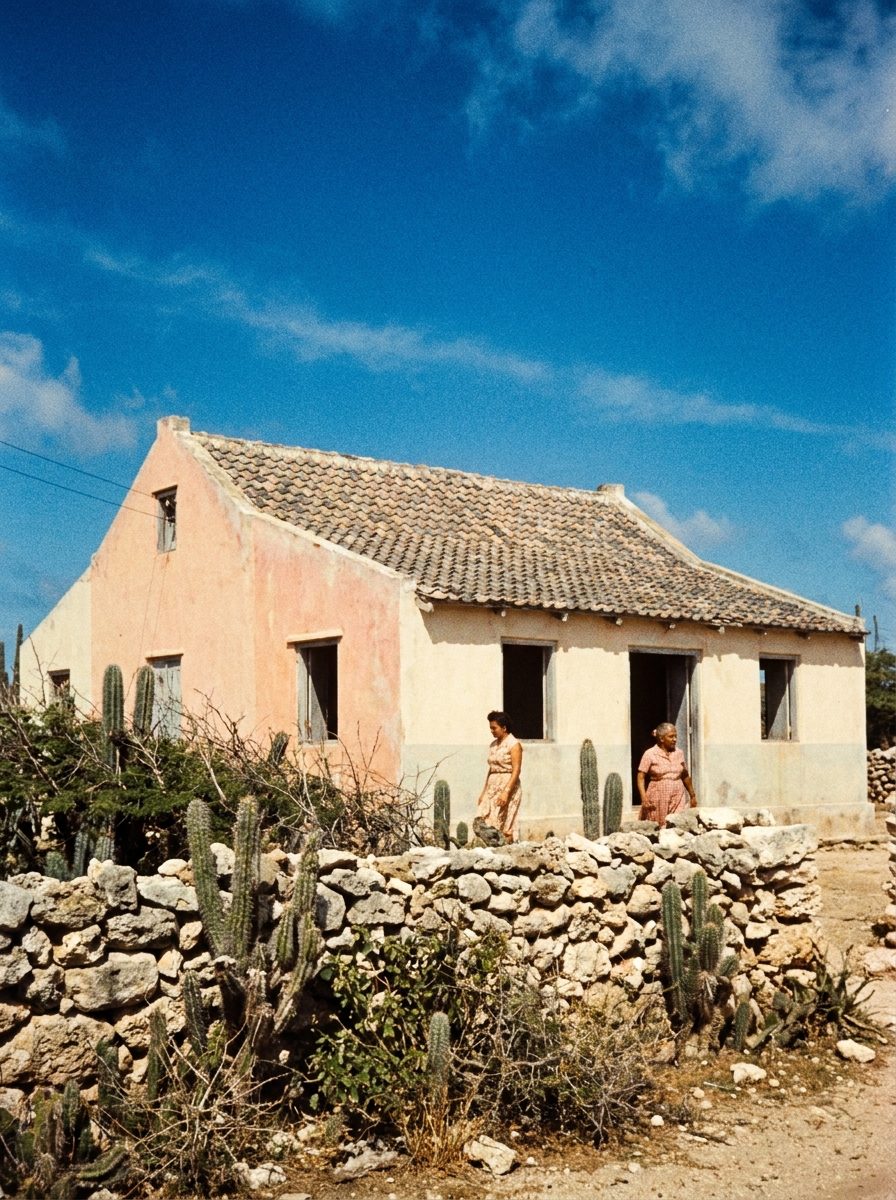
The first thing to unlearn is the postcard. Aruba is not a jungle island with waterfalls. It's a desert with a coastline, flat, sun-bleached, covered in cactus and wind-bent divi-divi trees, ringed by some of the calmest turquoise water in the Caribbean. The landscape is closer to Baja California than to Jamaica.
That surprises people, and then it wins them over. The dryness is why the beaches are so clear, why the mosquitoes are manageable, and why the sky is blue roughly 300 days a year. You trade "lush" for "dependable."
The island is small, about 20 miles end to end, so nothing is far. The tourist heart is the northwest coast: Palm Beach with its high-rise hotels, Eagle Beach with the low-rise ones. Oranjestad, the capital, sits mid-island and handles the government, the cruise port, and the serious grocery runs. The further southeast you go (Savaneta, San Nicolas) the quieter and more local it gets.
Life here runs on a different clock. Things open late, close for lunch, and "island time" is a real scheduling factor, not a slogan. If that makes your shoulders drop, you'll love it. If it makes your eye twitch, budget some patience.
The weather (and the hurricane thing)
Here's the headline that sells the whole island: Aruba lies below the main hurricane belt. It sits far enough south, off the coast of Venezuela, that direct hurricane hits are extremely rare. Storms that flatten islands further north usually pass Aruba by.
That is not a marketing line. It's the reason a lot of people buy here instead of elsewhere in the Caribbean, and it's the reason insurance and construction math work out more gently. "Rare" is not "never" freak weather exists everywhere, but the risk profile is genuinely different from, say, the Bahamas or Florida.
The day-to-day weather is almost comically consistent:
| What | Reality on Aruba |
|---|---|
| Average temperature | ~81–90°F / 27–32°C, all year |
| Trade wind | Near-constant, 15–20 mph, the island's natural A/C |
| Rain | Brief, mostly Oct–Dec, rarely ruins a day |
| Humidity | High, but the wind carries it off |
| Hurricane risk | Very low: south of the main belt |
Ranges are from lived experience and public climate data, we verify before publish.
The wind is the thing nobody warns you about. It's wonderful: it keeps you cool, keeps the bugs down, keeps the beach comfortable when the sun is brutal. It's also relentless. It will steal your napkins, tangle your umbrella, and dry your laundry in an hour. You stop noticing it after a while, and then you visit somewhere windless and feel like you're breathing soup.
"You don't move to Aruba for the drama. You move here because there isn't any."
Thinking past the holiday and toward a home here? Our free Aruba Buyer's Guide PDF covers the island-life realities and the buying process in one file. → Send it to me
Language: Papiamento, Dutch, English
Aruba is genuinely multilingual, and it's one of the most charming things about the place.
- Papiamento is the heart language: a creole blending Portuguese, Spanish, Dutch, English and African languages. It's what you'll hear between locals, on the radio, in the market. Learning even a few words (bon dia, danki, dushi) earns real warmth.
- Dutch is the official language of government and schooling: Aruba is a constituent country of the Kingdom of the Netherlands.
- Spanish is widely spoken thanks to Venezuela being right there.
- English is everywhere in daily and tourist life. School kids learn it early, and service, real estate, and healthcare all run comfortably in English.
The practical answer: you can live here in English without a problem. But you'll enjoy it more, and be treated as more than a visitor, if you pick up a little Papiamento. It costs nothing and it opens doors.
Getting around the island
Most people who live here end up with a car. Public transport exists, the Arubus system runs the main coastal corridor and it's cheap and reliable enough for the tourist strip, but the island isn't built around it once you're off the main line.
Your realistic options:
- Own a car. The default for residents. Fuel is pricier than the US, roads are decent on the main routes and rough in the cunucu (countryside). Driving is on the right.
- Rent long-term. Common for winter-only people like us; monthly rates beat daily ones by a lot.
- Arubus. Great along Oranjestad–Palm Beach, thin elsewhere.
- Taxis / rideshare. Taxis are fixed-rate, not metered, and add up fast. Rideshare presence is limited.
- Scooter / bike. Fun near the beach, less fun in the wind and midday heat.
If you're buying or renting a home away from the hotel strip (Noord, Savaneta, anywhere inland) assume you need a car. Distances are short but the sun and wind make walking a commitment.
The community and who else lives here
Aruba's population is small (a bit over 100,000) and the mix is remarkable for such a little place: Aruban families going back generations, a large Dutch contingent, Venezuelans, Colombians, North Americans, and a rotating cast of winter people and remote workers.
The vibe is friendly and unhurried. It's small enough that you start recognizing faces (your fruit guy, the bartender, the woman at the notary's office) within a few weeks. That familiarity is a big part of why people fall for it. It feels less like a resort and more like a town that happens to have world-class beaches.
For a foreigner settling in, the social on-ramps tend to be the beach clubs, the diving and watersports crowd, the church communities, and the expat/Dutch networks. It's not hard to meet people. It is a small island, though, so word travels and reputations stick, be a good neighbor.
What surprises people the most
After a few winters, here's what we see catch people off guard:
- The electricity bill. Water and power are desalinated and imported-fuel-dependent. Run the A/C hard and you'll feel it. (Numbers in the cost-of-living guide.)
- How dry it is. No rainforest. Bring lip balm and moisturizer, not a rain jacket.
- The wind, again. It's a personality, not a footnote.
- Groceries. Nearly everything is imported. You'll pay for that box of cereal.
- Owning ≠ living here. A property title is not a residency permit. This trips people up constantly. (Residency basics.)
- How safe it feels. Aruba is one of the calmer corners of the Caribbean. Normal precautions, but people are consistently surprised how relaxed it is.
- Sundays are slow. Plan your shopping. A lot closes or shortens hours.
The money side, briefly
We'll be honest with you throughout this cluster: Aruba is not a cheap island. Paradise with a wind machine and a hurricane-free postcode is not going to be cheap: it's imported, it's in demand, and the beaches are worth it to a lot of people.
The three costs that matter most to anyone thinking of living or investing here:
- Everyday cost of living, groceries, dining, utilities. The real monthly breakdown for a couple →
- Healthcare and residency, quality is good, but access and legal status have rules. Start here →
- If you plan to rent your place out, short-term near the beaches can perform well, but the rules and taxes are real. The numbers →
And if you're weighing an actual purchase, the mechanics, freehold vs. land lease, closing costs, the notary, live in our complete buying guide, and the neighborhoods are broken down area by area.
Where to go next
This is the hub of our Island Life cluster. The guides below go deep where this one goes wide:
- Moving to Aruba from the US or Canada, the practical checklist: what order to do things in, shipping, pets, cars and the admin.
- Cost of living on Aruba, a real monthly budget for a couple, and why the electricity bill is the shocker.
- Healthcare & residency basics, quality, insurance, and the fact that owning property doesn't grant residency.
- Is Aruba safe?, crime, area by area, and what "safe" means once you own an empty place here.
- Renting out your property: the numbers, short-term vs. long-term yields, occupancy, fees, and the tourist-rental rules.
Fall for the island? Take it home in one file. Get our free Aruba Buyer's Guide PDF: island-life realities, the buying process, land lease vs. freehold, and the costs, all in one place. → Send me the guide Already picturing a specific place? → Take the 60-second property match instead
Common questions
Is Aruba a good place to live full-time?
For a lot of people, yes: stable weather, low hurricane risk, safe, English-friendly, and a genuine community. The trade-offs are cost (everything's imported) and the fact that it's a small island, which some love and some outgrow. Spending a full season before committing is the smartest thing you can do.
Is Aruba in the hurricane belt?
No: it sits south of the main Caribbean hurricane belt, off the coast of Venezuela, and direct hits are rare. That's one of its biggest draws. "Rare" isn't "never," but the risk is genuinely lower than most of the region.
What language do they speak on Aruba?
Papiamento is the native language and Dutch is official, but Spanish and English are widely spoken. You can live and do business here comfortably in English, though a little Papiamento goes a long way socially.
Do I need a car to live on Aruba?
Along the Oranjestad–Palm Beach strip you can manage with the Arubus and taxis. Anywhere else (Noord, Savaneta, inland) plan on a car. The island is small but the sun and wind make walking a chore.
Does buying property on Aruba let me live there?
No. Owning a home and having the legal right to reside are two separate things. A property title does not grant residency. See our healthcare & residency guide for the routes at a high level (and it's not legal advice).
Can you drink the tap water on Aruba?
Yes. All of the island's drinking water is desalinated seawater, and it comes out of the tap clean enough that locals drink it without thinking about it. You do not need bottled water here, which is one of the few things on Aruba that costs you nothing extra.
Is Aruba expensive?
Yes, relatively. Because nearly everything is imported, groceries, dining, and especially utilities run higher than many people expect. Our cost-of-living guide has the real monthly numbers.
Related guides