
Guides → PROPERTY TYPES
PROPERTY TYPES
Houses & Villas in Aruba: What to Check Before You Offer
More space, more privacy, more of it your responsibility. Before you fall for a pool and a view, here's the honest walk-through of what to inspect on an island where everything gets shipped in.
By Jakob Jakubov, every winter on Aruba since 2021 · Updated August 2026 · 11 min read
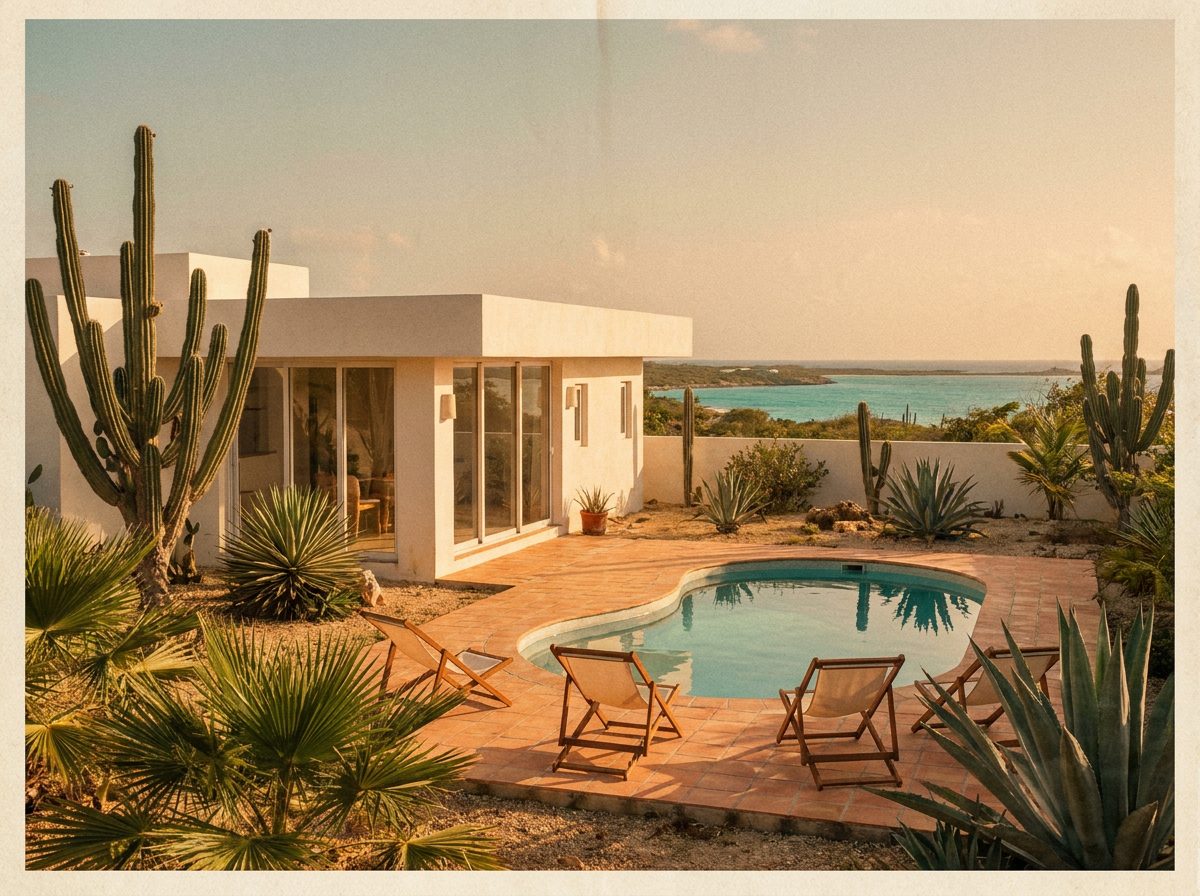
The short version
- A house or villa gives you land, privacy, and space a condo can't, but you own every repair: roof, AC, pool, water system, all of it.
- The big-ticket things to inspect: roof, AC, cistern/water system, pool equipment, and the land status underneath.
- Aruba sits below the main hurricane belt, but the constant trade wind and salt air are hard on buildings: check for wear, not just storm damage.
- Water can be city water or a cistern/well, know which you're buying and what it costs to run.
- Inspections here are less formal than in the US or Europe: you often have to organise your own, and it's worth every florin.
House vs. villa vs. condo, a quick gut check
A house or villa is the right call when you want land, privacy, and space, a garden, a private pool, room for family, no shared walls or HOA rules. It's the wrong call if you want hands-off ownership. Everything a condo's monthly fee quietly handles (the roof, the pool pump, the landscaping, the security while you're away nine months a year) is now yours to arrange and pay for.
That's the real trade. If you're an absentee winter owner, be honest about whether you want to manage a property from another continent, or pay someone to. Many house owners here keep a property manager on a small retainer, factor that in. If low-maintenance matters more than land, the condos guide is your path; if you want to build exactly what you want, look at buying land instead.
The five things to inspect first
On this island, five things drive almost every expensive surprise. Get these right and you've covered most of your downside:
- The roof, sun, salt, and wind punish it constantly.
- The AC system(s), expensive to replace, essential here, often neglected.
- The water system, city connection, cistern, or well, each with its own costs.
- The pool, pump, filtration, and the shell, all exposed to the elements.
- The land status, freehold, land lease, or cunucu, underneath it all.
The rest of this guide is those five, plus the wind-and-hurricane reality and how inspections actually work here.
Roof, AC, and the salt-and-wind problem
Here's the thing mainland buyers underestimate: Aruba's climate is gentle to live in and brutal on buildings. The trade wind blows salt air across everything, all day, every day. It corrodes metal, works at seals, and ages exteriors faster than a calmer climate would.
Roofs take the worst of it: flat roofs especially, which are common here, need their waterproofing and drainage checked closely. Look for patches, ponding, and past leak repairs. AC systems are the other big one: they're non-negotiable in this heat, they're expensive to replace, and units near the coast corrode faster. Ask the age of every unit, whether it's been serviced, and budget to replace anything old soon after you buy.
Metal fixtures, railings, window frames, gates: anything metal near the coast is a salt casualty in waiting. None of this is a reason not to buy; it's a reason to inspect properly and price the near-term repairs into your offer.
Water: City, cistern, or well
Aruba makes most of its drinking water by desalination, and it's good, but how your house gets water varies, and it affects both cost and reliability. A property may be on the city water connection, or rely on a cistern (a tank collecting/storing water), or in some rural spots a well. Some homes combine them.
Know which you're buying. Ask about the monthly water cost, the condition and size of any cistern, and whether the well (if there's one) gives fresh or brackish water, not all do. This is exactly the kind of detail that's invisible in a listing photo and very visible in your running costs, so put it on the inspection list.
Pools: The fun part that costs money
Almost everyone wants the pool, and it's genuinely one of the best parts of owning here. Just go in clear-eyed: a pool is equipment plus a shell, both exposed to sun and salt, and both cost money to keep right. Check the age and condition of the pump and filtration, look at the shell and tiling for cracks, and ask what the pool costs to run and maintain monthly, including the service you'll pay for while you're away.
None of this should scare you off a pool. It should just be a line in your budget and a section in your inspection, not a pleasant surprise you discover is an expensive one.
Torn between a turnkey villa and a house you'd renovate? That choice changes your whole budget. Take the 60-second Property Match, tell us your budget, appetite for maintenance, and must-haves, and we'll match you with the right property type and the one vetted agent for it. → Start my 60-second match
Land status: Freehold, land lease, or Cunucu
Under every house on Aruba is land that's either freehold (you own it), land lease (erfpacht, a long, renewable government lease with an annual fee), or, for some older rural homes, cunucu land with its own history. This isn't a footnote: it can swing the value of two otherwise-identical houses.
For a house or villa specifically, freehold on a good plot is the premium, but a long land lease with a modest fee is completely normal and nothing to fear: some of the best streets sit on it. What you must do is get the exact status, and for land lease the remaining term and annual fee, confirmed by the notary in writing. The freehold vs. land lease guide is the full explainer, and it's essential reading before you offer on any house here.
Hurricane and wind: The honest risk
Good news, mostly: Aruba sits south of the main Atlantic hurricane belt, and direct hits are rare compared to islands further north. That's a genuine part of the island's appeal and it's true.
The honest caveat: "rare" isn't "never," and the everyday wind is the bigger practical factor for a building. The constant trade wind and salt are what age a house here, and a serious tropical system, while uncommon, isn't impossible. So check that a house is built and maintained for the wind, solid roof fixing, good shutters or storm protection, sound exterior, and confirm what insurance costs and covers. Don't let "Aruba doesn't get hurricanes" turn into skipping the wind check entirely.
The inspection reality on the island
Here's where mainland buyers get caught out: Aruba's home-inspection culture is less formalised than what you're used to. There isn't the same conveyor belt of licensed inspectors and standard reports as in the US, and a listing won't come with a thick disclosure packet. Much of the time, it's on you to arrange a proper inspection, and to insist on it.
Do it anyway. Bring in someone who knows local construction to check the roof, AC, water system, pool, and structure before you're committed. Read the meter and utility costs. Get the land status in writing from the notary. The island is small and word travels: a good local agent can point you to people who do this properly. It's the cheapest insurance you'll buy on the whole purchase.
On Aruba, nobody hands you the inspection report: you have to go get it. The buyers who skip that step are the ones we hear regret it.
Want the full pre-offer checklist for houses and villas? The 25-page Aruba Forever Buyer's Guide PDF includes the room-by-room inspection list, the wind-and-water questions, and the land-status checks, plus a price heat map by area. → Send it to me
Common questions
Can foreigners buy a house or villa in Aruba?
Yes, with no restrictions: foreigners buy under the same rules as locals, and can own the house and land outright. See our complete buying guide for the full process.
Does Aruba get hurricanes?
Aruba sits south of the main hurricane belt, so direct hits are rare compared to islands further north: a real part of its appeal. Rare isn't never, though, and the constant trade wind is the bigger day-to-day factor for buildings, so still check construction, storm protection, and insurance.
What should I inspect before buying a house in Aruba?
Prioritise the roof, the AC systems, the water system (city, cistern, or well), the pool equipment, and the land status underneath. Salt and wind age buildings fast here, and inspections are less formal than in the US, so arrange your own.
Is the water safe, and how does it work?
Aruba's desalinated water is good quality. How your specific house gets it varies (city connection, cistern, or well) so confirm which, the running cost, and the condition of any cistern before buying.
Do houses in Aruba come on freehold or land lease?
Both, plus some older cunucu land. Freehold means you own the land; land lease is a normal, renewable government lease with an annual fee. Always confirm the exact status, and for land lease the remaining term and fee, in writing via the notary.
Related guides