
Guides → PROPERTY TYPES
PROPERTY TYPES
Buying Land in Aruba: Lots, Cunucu, and the Pitfalls
The dream is building exactly what you want. The reality is permits, utilities, and a timeline longer than you think. Here's the honest map before you buy a plot.
By Jakob Jakubov, every winter on Aruba since 2021 · Updated August 2026 · 10 min read
The short version
- Land is the only way to build exactly what you want, but the plot price is the smallest part of the total.
- Two broad types: developed/serviced lots (utilities nearby, ready to build) and raw cunucu land (rural, often unserviced, cheaper).
- Land lease vs. freehold matters even more for land than for built property: a short or restrictive lease can block or complicate a build.
- Budget honestly for utilities, permits, and construction, building costs run roughly $1,200–$2,500+ per m² depending on spec.
- The timeline from plot to keys is often 1–2+ years, permits and building both take time on a small island.
Who buying land is actually for
Let's be honest up front: buying land is the hardest, slowest way onto the island, and for the right person, the most rewarding. It's for you if you want to build exactly what you want, you're comfortable managing (or paying to manage) a construction project from a distance, and you're not in a hurry. A plot with a sea view in an area you love, built to your own plan, is a genuinely great outcome.
It's not for you if you want to be sitting on your own terrace next winter, or if "how hard can it be" is your whole plan. If you want in soon and simply, a condo or an existing house will get you there years faster. Buying land is a project, not a purchase.
Lots vs. Cunucu land
Broadly, land here comes in two flavours, and the price gap between them is exactly the work you'll have to do.
Developed or serviced lots sit in or near established residential areas. Utilities (water, electricity) are at or near the boundary, roads exist, and the plot is more or less ready to build once permits are in hand. You pay more per square metre, but you're buying a shorter, more predictable path to a finished house.
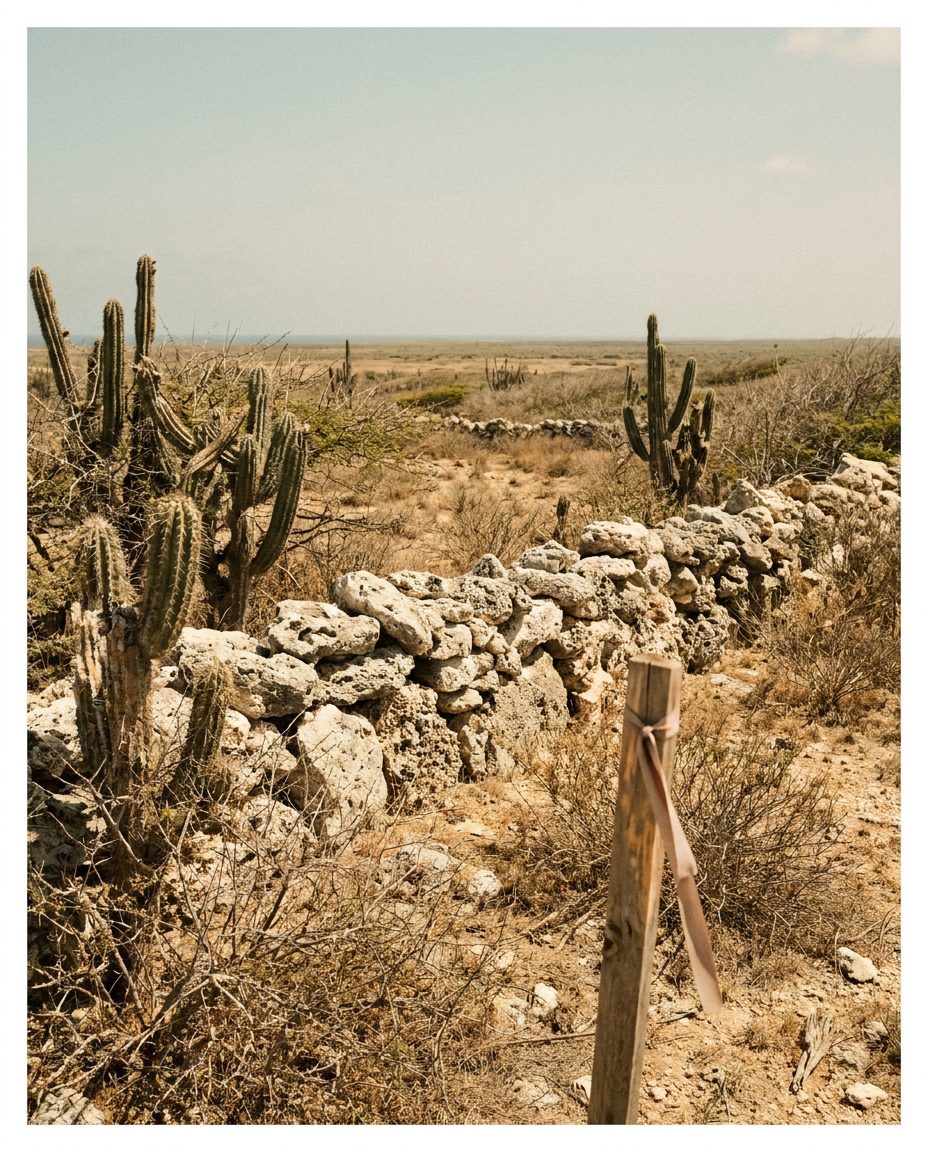
Cunucu land is Aruba's rural, often agricultural interior land: the open, dry, divi-divi country. It's cheaper, sometimes much cheaper, and it can be beautiful and private. The catch is that it's frequently unserviced (utilities may be far away), may have access, zoning, or historic-use questions, and can carry restrictions on what and whether you can build. Cheap cunucu land that you can't easily service or get permits for isn't a bargain, it's a tied-up deposit.
| Land type | Rough price level | Utilities | Build-readiness |
|---|---|---|---|
| Serviced residential lot | Higher per m² | At or near boundary | Ready once permitted |
| Cunucu / rural land | Lower per m² | Often distant or absent | Depends heavily on plot |
Prices swing enormously by location and service level: treat this as direction, not quotes, and verify each specific plot.
Land lease: The pitfall that bites hardest here
You'll meet freehold and land lease (erfpacht) again, and for land, the stakes are higher than anywhere else. On built property, a land lease is mostly a pricing matter. On a bare plot you intend to build on, the lease terms can directly affect whether and what you're allowed to build, and for how long you'll hold it.
The pitfalls to watch: a short remaining lease term (you don't want to sink a build into a lease with limited years left), build conditions or timeframes attached to the lease (some require you to build within a set period), and an annual fee that's fine now but worth understanding long-term. None of this makes land lease a no, plenty of homes are built on it, but you must read the lease with the notary before you buy, not after. This is the single most common way land buyers get caught out. Start with the freehold vs. land lease guide, then have the notary walk you through the specific lease.
Utilities: What "unserviced" really costs
A listing that says "unserviced" or "utilities nearby" is doing a lot of quiet work. Getting water and electricity to a plot that doesn't have them can range from a modest connection cost to a serious sum if the infrastructure is genuinely far away. The same goes for road access and sewage/septic.
Before you buy any plot, especially cunucu land, get a real answer on: how far are water and power, who pays to bring them in, and roughly what that costs. This is the number that most often turns a "cheap" plot into an expensive one, and it's entirely knowable in advance if you ask.
Not sure whether land or an existing home fits your timeline and budget? It's a big fork. Take the 60-second Property Match, tell us your plan and how soon you want to be on the island, and we'll point you at the right path and the one vetted agent who knows local plots and builders. → Start my 60-second match
Permits and what you can build
You can't assume a plot lets you build what's in your head. What you can build is governed by zoning and building permits, and it's shaped by the land's designation, its lease conditions (if any), and local rules. Some land is residential-ready; some cunucu land carries agricultural or use restrictions that limit building.
The move here is to confirm, before purchase, what the plot is zoned for and what the permit path looks like for the kind of home you want. Build the permitting process into your timeline and budget: it takes time and it's a normal part of building here, not an obstacle you can skip. A local architect or builder who knows the permit office is worth their fee just for this.
Build costs, honestly
Here's the part that surprises people most: on Aruba, materials and much of the fit-out get shipped in, which pushes construction costs above what the plot price might lead you to expect. As a rough planning figure, building runs on the order of $1,200–$2,500+ per square metre depending on spec, finish, and site: a simple build at the low end, a high-finish villa well above it.
Add to that the utility connections, permit costs, and a contingency (always keep one: remote-site building surprises are normal). The honest way to budget land is: plot price is often the smallest line. Do the full sum, land + utilities + permits + build + contingency, before you commit, and compare it against just buying an existing house. Sometimes building wins; sometimes the finished house next door is the better deal.
The real timeline
Set expectations now: from buying a plot to holding the keys, plan on one to two-plus years, sometimes more. Roughly: purchase and land-status checks, then design and permits, then construction, then finishing and connections, each stage takes real time, and a small island has a finite number of good builders, so scheduling matters.
That's not a reason to avoid it: it's a reason to start with your eyes open. If you love a plot and you're patient, the wait buys you a home nobody else has. If you need to be on your terrace by next winter, buy something built.
On Aruba, the plot is the cheap, fast part. The build is where the money and the years go: budget both honestly and land is a joy, not a trap.
Building on Aruba? Get the full land-buyer's checklist. The 25-page Aruba Forever Buyer's Guide PDF covers the land-lease traps, the utility and permit questions, a build-cost planner, and a realistic timeline, plus a price heat map by area. → Send it to me
Common questions
Can foreigners buy land in Aruba?
Yes, with no restrictions on foreign buyers: the same rules apply as for locals. You can buy a plot and build. The complications are practical (utilities, permits, lease terms), not legal. See our complete buying guide.
What's the difference between a lot and Cunucu land?
A serviced lot sits in or near a residential area with utilities at hand and is quicker to build on. Cunucu land is rural, often unserviced and cheaper, but may carry access, zoning, or use restrictions: verify each plot before buying.
How much does it cost to build a house in Aruba?
As a rough guide, on the order of $1,200–$2,500+ per m² depending on spec, because materials are largely shipped in. Add utility connections, permits, and a contingency: the plot price is usually the smallest part of the total.
How long does it take to build on Aruba?
Realistically one to two-plus years from buying the plot to keys, covering land checks, design and permits, construction, and connections. If you need to be on the island soon, an existing home is far faster.
Is buying land on land lease risky?
It's common and workable, but land lease matters more for bare land than for built homes: a short remaining term or build conditions can affect what you can do. Read the lease with the notary before buying; see the freehold vs. land lease guide.
Related guides